What is multiple sclerosis?
We have carers who are specially trained to support people living with multiple sclerosis, supporting them day-to-day, meaning they can get the most out of life.
Multiple sclerosis (MS) is a chronic, autoimmune condition that affects your central nervous system. The disease disrupts the communication between the brain and the rest of the body, causing a variety of neurological symptoms. MS is a progressive disease, but the speed of progression varies from person to person.

What are the symptoms of multiple sclerosis?
The common symptoms of MS include:
- Muscle weakness
- Partial or complete paralysis
- Reduced coordination and issues with balance
- Difficulty with bladder regulation
- Difficulty with cognitive function (such as thinking, memory, concentration, learning and judgement)
- Muscle stiffness, spasms and tremors
- Vision problems
- Depression and mood changes
We understand that living with MS can be physically and emotionally challenging. That’s why we have carers, trained to help you get the most out of life – putting you back in control of your health.

How can our care help you with these symptoms?
These symptoms can have a definitive and drastic impact on your life – but you don’t need to cope with MS alone. Our carers are trained to support you mentally and physically. It is part of our Walfinch Activity Promise to promote 10 mins of physical activity on each one hour visit.
Our carers may help you with:
- Personal care
- Getting to and from the shops
- Support with professionally-approved exercises
- Night-time care
- Activities that boost your wellbeing
- Help with domestic tasks
- Travel to and from appointments
This is just a glimpse into what we could do for you. But you call the shots, decide how you want to live, and we work with you to make that happen.
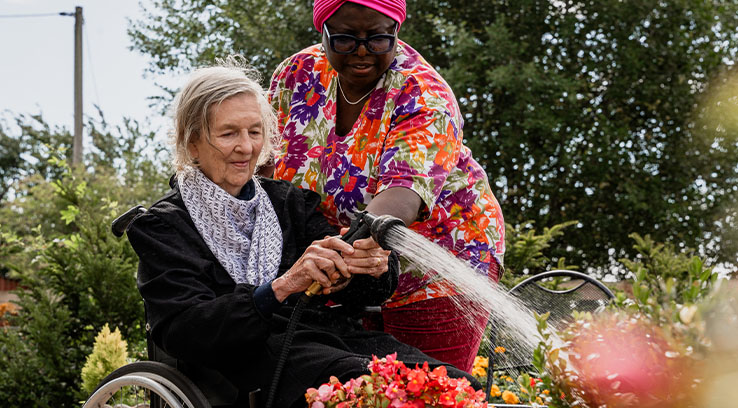

Thriving doesn’t stop when MS starts
Lifestyles can be adapted to better help you to thrive. Whatever it is you require whilst living with MS, we can accommodate this.
For example, changing the way your home is set up can help you stay independent for longer. Many of our clients still find the time to thrive, living with MS: they go swimming, enjoy the outdoors, meet friends and get the most out of life.
So, what do you love to do – and, most importantly, how can we support you to do more of it?

Start thriving today through quality care
It’s never too early to kickstart your thriving journey. Use your care to take back control over your life and your health – and we can navigate these uncertain times together.
We don’t see care as the end – it’s just the next chapter. For some clients just four hours of care a week has provided transformative results. It’s never been easier to live better for longer.
Through various techniques and approaches to care, tailored around your lifestyle and goals, you can make now your time to thrive.
Get in touch and speak to our care team…
Find out how Walfinch home care can work for you, speak to a member of our friendly team.

Search for Walfinch home care services near you: